
How to Search Civil Dockets
A Fisher County civil search is not one universal name lookup. District lawsuits, family matters, title-to-land disputes, election contests, and contested probate generally begin with the District Clerk. Small civil matters within the justice court's limit begin with the JP. County Clerk systems cover probate and recorded land records, but a deed or lien index is not a civil case docket. A case assigned to the 1st Multicounty Court at Law may require confirmation with that court and the relevant local clerk.
Use the known case type and cause number to choose the route:
- Identify whether the matter is district civil, family, probate, recorded land, or justice-court civil.
- Search the County Clerk portal only for the categories it actually advertises.
- Call the District Clerk at 325-776-2279 or the JP at 325-776-2482 when no public local search exists.
- Use re:SearchTX only as a supplemental search for participating civil records.
- Request the docket sheet, named filing, judgment, or certified copy from the official custodian.
Give the clerk party names, a date range, the court, and the cause number when known. Those details separate similar names and record sets.
Map the Fisher Civil Court
Jurisdiction decides where a civil docket lives. In Fisher County, that usually means the 32nd District Court. Its civil authority is broad: title-to-land disputes, election contests, contested probate, family cases, and civil matters of at least $200, plus anything not assigned elsewhere. The constitutional Fisher County Court is different. The current OCA profile shows none. The county's Justice of the Peace page sets a civil limit of $20,000 in controversy.
| Matter | Likely court | Record route |
|---|---|---|
| General civil, family, land title | 32nd District Court | Fisher District Clerk |
| Small civil claim up to stated limit | Justice of the Peace | JP direct request |
| Assigned statutory-county matter | 1st Multicounty Court at Law | Confirm county and clerk |
| Probate or recorded instrument | County or district court as assigned | County Clerk or District Clerk |
Unsure which court has the file? Describe the dispute and filing type to the clerk rather than guessing, because a search in the wrong office can miss a valid Fisher County civil record.
What a Civil Docket Shows
A civil docket is a chronological register. Its entries may show the cause number, case style, parties, petition, service event, answer, motions, hearing settings, signed orders, judgment, dismissal, or appeal activity, and one entry can point to an electronic document without displaying the image. Fields are procedural acts. They do not settle the truth of an allegation.
| Case Number | The unique cause number used by the court and clerk. |
|---|---|
| Parties | Plaintiff, defendant, petitioner, respondent, or another legal role. |
| Filings | Petitions, answers, service returns, exhibits, and notices accepted into the file. |
| Motions | Requests made to the court; filing does not mean the request was granted. |
| Judgment | The signed final ruling or other disposition, subject to later activity. |
A proposed order is not a signed order. In the same way, a filing timestamp only shows receipt or acceptance, never a ruling on the merits.
Fisher Civil Filing Trail
A common Fisher civil sequence is Petition → Citation or Waiver → Answer → Scheduling Order → Discovery and Motions → Mediation or Hearing → Trial or Settlement → Final Judgment. Some cases settle early, are transferred, or end by dismissal or nonsuit. “Nonsuit” generally means a party ended its own claim under the applicable procedure; the actual signed order controls what remains.
The 32nd District Court scheduling order offers useful local clues. Its fields run from the court and county, cause number, and case style through pleadings, discovery, joinder, experts, dispositive motions, mediation, pretrial, and the trial date. That range makes the docket handy for tracking deadlines. A short index line says less. Ask the District Clerk for the document when its exact terms matter.
Types of Civil Cases on the Docket
Fisher County civil dockets split into several record paths. The case type drives the court, the public detail, the fee, and the filing method, and the local jurisdiction descriptions support these common categories:
- general civil disputes and contract or debt claims;
- title-to-land and other property litigation;
- family-law and parent-child matters, subject to privacy limits;
- contested probate and estate proceedings;
- small civil matters within the Justice of the Peace limit;
- election contests and other matters assigned by law.
Recorded deeds, liens, and assumed names live elsewhere. They are County Clerk record categories, not civil lawsuit entries, even when they connect to a dispute. Search both systems only when the question needs both.
Fisher E-Filing Since 2014
Mandatory civil and family e-filing in Fisher County began July 1, 2014, per District Clerk instructions, with limited exceptions. Required exhibits and attachments go with the lead PDF. Acceptance locks the envelope. A signature or exhibit left out after acceptance cannot simply be added to it, so the filer must follow the amendment or resubmission process.
Filings travel through eFileTexas. The official eFileTexas page shows the portal Fisher filers use to submit their envelopes.
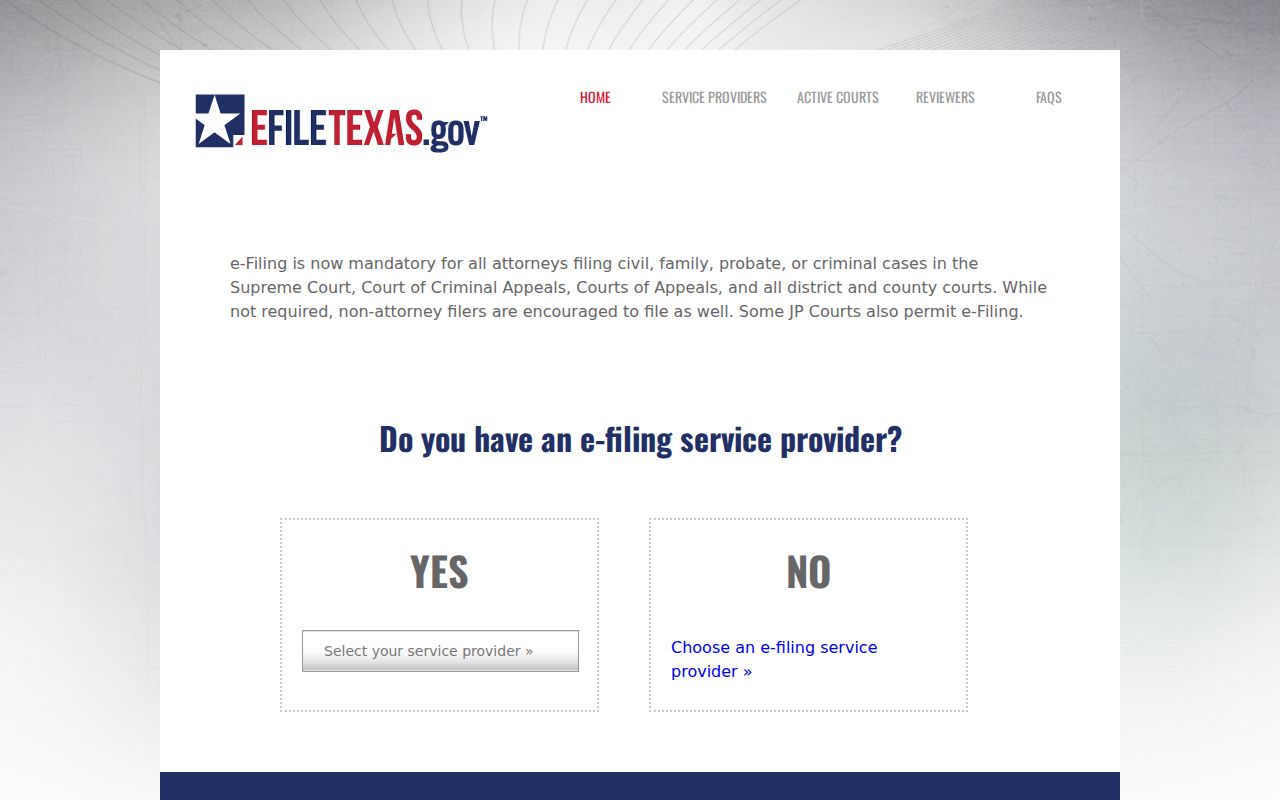
The portal transmits a filing. It does not replace the District Clerk's official docket, and it cannot guarantee an envelope was accepted. The state filing-code list is broad. Fisher instructions tell the filer to choose the closest official code and allow clerk correction where permitted. Rejection has its own quirk. A rejected envelope can leave a temporary card preauthorization even though the fee was never collected, and the local material says that hold can last three to five business days, or up to two weeks.
Settings and Hearings on Civil Dockets
A civil setting marks a scheduled event. It is not the result. The 32nd District Court public calendar usually places Fisher settings on Wednesdays, because the court rotates through Fisher, Mitchell, and Nolan Counties and keeps its administrative office in Sweetwater. The calendar gives the date and event. The docket and scheduling order hold case-specific history and deadlines.
Check the latest docket entry and the signed notice. If a setting changed, confirm it with the Fisher District Clerk or court coordinator at 325-235-3133. A continuance moves a hearing or trial to a later date. A reset is a new setting. Neither word means the case was dismissed. One scheduling order can carry a mediation deadline, a pretrial date, and a trial setting, each serving a different purpose.
The dedicated Fisher County court calendar explains how to verify a current hearing date.
Compare Fisher Civil Fees
Keep each fee tied to the office that set it. Fisher County has two civil fee schedules, not one. The District Clerk's 2024 schedule charges $350 to file a new civil or family suit. It also charges $366 for a protective order. The County Clerk's probate and civil page shows a $366 civil filing figure that includes one citation. Sheriff citation charges sit on top. Those are different channels, so don't blend them. Don't treat them as a single countywide price for a Fisher County civil docket filing.
| Office/source | Published item | Amount or rate |
|---|---|---|
| District Clerk 2024 schedule | New civil/family suit | $350 |
| District Clerk 2024 schedule | Protective order | $366 |
| County Clerk web page | Civil filing including one citation | $366 |
| District Clerk schedule | Paper / electronic copy | $1 page / $0.10 page, $1 document minimum |
| County Clerk | Plain / certified copy | $1 page / plus $5 certification |
Check three things before you pay. Confirm the schedule date, the service charge, and whether you need certification. An exemplified copy carries extra authentication, and the District Clerk adds $5 for it. A reporter's transcript is a different record entirely. It is held by the reporter rather than the clerk.
Public Access to Civil Dockets
Texas civil court records lean toward public access. That presumption bends, though. Sealing orders and statutes can wall off documents or data, and family cases, adoption records, juvenile material, protective-order contact details, personal identifiers, and sealed papers all call for care. The Texas Public Information Act covers non-court county records in general. Judicial case records follow court rules and the clerk's process instead.
Key Rules:
Texas Rule of Judicial Administration 12 supplies a request framework for judicial records, though adjudicative case files follow their governing access rules.
Texas Rule of Civil Procedure 76a addresses openness and standards for sealing court records.
Texas Government Code Chapter 552 governs public information held by county offices outside the judicial-case-record boundary.
A restricted index entry means the underlying document is unavailable. Don't guess at what's inside it. Ask the proper clerk how to request access under the current procedure.
Fisher Civil Portal Boundaries
eFileTexas and re:SearchTX do different jobs. One sends filings to a court. The other offers statewide search and access for participating civil records. Neither one amounts to the complete Fisher County civil docket. The District Clerk keeps the district files, and the County Clerk and JP each hold their own court records. For filing rules and access limits, read the official eFileTexas terms and access source.
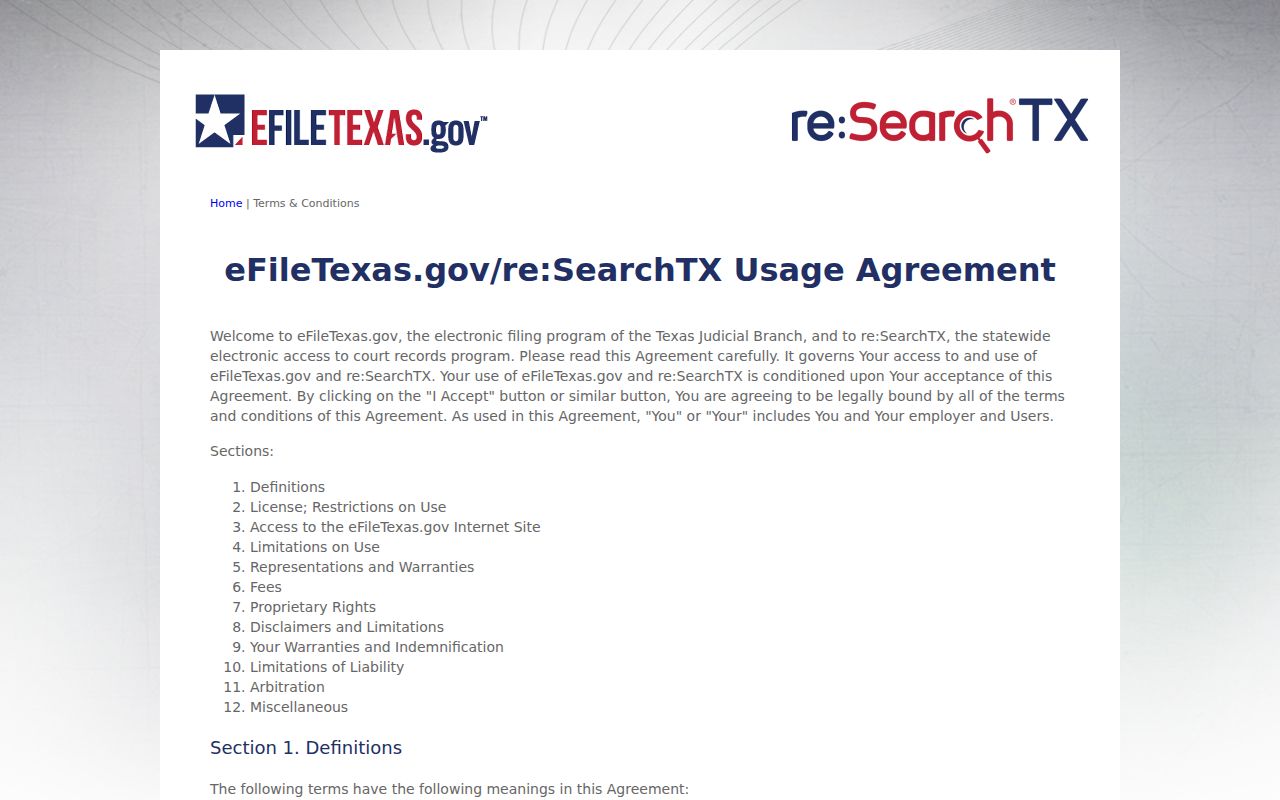
The terms make one point clear. A portal display is never the final word. Users must verify the official court record itself. If online access fails, pick up the phone or go in person. The District Clerk sits at 112 N. Concho Street, Roby, with mail to PO Box 88. The County Clerk answers at 325-776-2401 or clerk.info@fishercounty.org. When you write, name the case, the date range, the court, the document, the delivery form, and whether you need a certified copy.