
How to Search Criminal Dockets
Fisher County splits criminal records among four offices. The offense level tells you where to go. Misdemeanor A and B indexes sit with the County Clerk. That office uses its Local Government Solutions portal. Felonies go to District Clerk Gina Pasley. The 32nd Judicial District Court handles those prosecutions. Justice of the Peace Angie Pippin takes traffic and other fine-only Class C cases countywide. Rotan Municipal Court keeps city-ordinance and municipal Class C matters. Neither lower court offers a public case-search form.
Begin with the charge level, the filing court, or where the citation was issued. Then pick the matching route.
- Check the County Clerk index for a Fisher County misdemeanor A or B matter.
- Call the District Clerk at 325-776-2279 for a felony or district criminal file.
- Call the Justice of the Peace at 325-776-2482 for a county Class C case.
- Contact Rotan Municipal Court at 325-735-2251 for a city case.
- Ask for the cause number, public docket, disposition, and required copy certification.
The statewide re:SearchTX portal can help, but only as a backup. Coverage varies by participating records. The state report notes that criminal case records fall outside its general document collection.
Four Fisher Criminal Search Paths
The court name matters more than a broad name search. A County Clerk hit does not rule out a felony file at the District Clerk. Fine-only cases before the JP or Rotan Municipal Court will not appear there either. Federal charges tied to Fisher County are separate Northern District of Texas cases. Search those through PACER.
| Case level | Custodian | First contact |
|---|---|---|
| Felony | District Clerk, 32nd District Court | 325-776-2279 |
| Misdemeanor A or B | County Clerk, County Court | Online index or 325-776-2401 |
| County Class C | Justice of the Peace | 325-776-2482 |
| Rotan municipal/Class C | Rotan Municipal Court | 325-735-2251 |
This split explains why an empty screen is not a finding that no record exists. You may simply have asked the wrong office. Search every court that fits the charge level and location.
What a Criminal Docket Shows
A public Fisher County criminal docket can list the court, cause number, parties, charge, filing date, attorneys, bond events, settings, motions, orders, and judgment status. Labels differ from court to court. The county posts no complete felony sample docket, and the County Clerk portal gates full details behind account and purchase status. Trust only the fields on the screen.
| Cause Number | The court's unique file reference for calls and copy requests. |
|---|---|
| Charge | The allegation filed in court, not a finding of guilt. |
| Setting | A scheduled arraignment, plea, pretrial, or trial event. |
| Order | A direction signed by the judge that may resolve one issue. |
| Disposition | The official outcome label, sometimes recorded in a later order. |
A document icon does not mean free viewing. The County Clerk FAQ separates free index or preview access from paid image access. Some records show less detail than others.
Fisher Criminal Entries Need Context
An arrest, complaint, information, or indictment marks a step, not a verdict. None of them is a conviction. A plea setting proves no plea was entered. A trial setting proves no verdict followed. Cases get dismissed, reduced, deferred, transferred, or resolved by other orders. Read narrowly: state what the docket says, note its date, and hunt for the final signed order.
- Arraignment
- A hearing where the charge is addressed and a plea may be taken.
- Setting
- A scheduled court event, which may later be reset.
- Disposition
- The recorded outcome of a charge or case.
- Deferred
- A status that postpones final judgment under stated terms; the exact order controls.
If the index says only "filed," stop at that fact. Never infer a sentence or outcome missing from the Fisher County criminal court record.
Stages on a Criminal Docket
A typical criminal docket moves through Filing → Arraignment → Pretrial → Plea or Trial → Disposition → Sentencing. The route is not fixed. A dismissal can end a charge before trial, a setting may be continued, or a plea and sentencing may occur close together. Each Fisher County entry should be read with the next signed order rather than as a stand-alone verdict.
For district matters, the 32nd District Court calendar usually lists Fisher settings on Wednesdays. That agenda is a scheduling aid, not a full criminal docket. Confirm the cause number and current setting before driving over. Call the District Clerk or court coordinator at 325-235-3133. A reset may post after an earlier notice went out.
Fisher Class C Docket Rules
Fine-only Class C cases run on their own procedure in justice or municipal court. The Texas Code of Criminal Procedure Chapter 45A sets that framework. It does not convert the County Clerk's misdemeanor A/B category into a Class C portal. Different levels, different custodians.
The official Chapter 45A page spells out the justice and municipal criminal rules. Those rules govern these Fisher County cases.
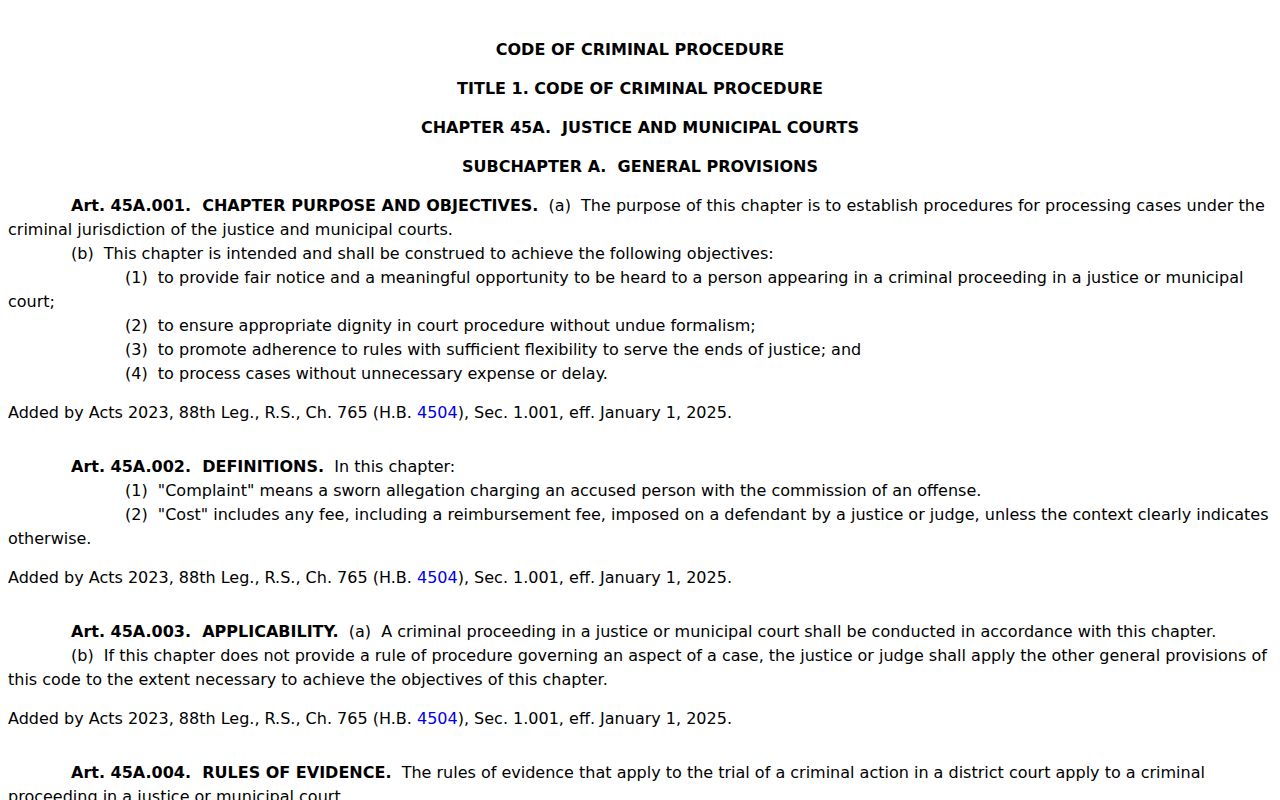
That split sends county citations to the Fisher County JP and city matters to Rotan Municipal Court. Ask either court for its case number, plea or setting status, and how to get a public copy. Neither court offers a public citation search.
Which Court Holds Criminal Dockets
The 32nd District Court is Fisher County's general-jurisdiction trial court for felonies. It also serves Mitchell and Nolan Counties. Its administrative office sits in Sweetwater, while Fisher records stay with the Fisher District Clerk. The constitutional Fisher County Court holds the criminal jurisdiction shown in the current OCA profile. Misdemeanor records sit at the County Clerk.
Lower criminal dockets stay local. The countywide JP works from the Fisher County courthouse in Roby. Rotan Municipal Court sits at 302 W. Sammy Baugh Avenue in Rotan. It is reachable at Shana@cityofrotan.org. Any request should name the court. Add the cause or citation number, defendant name, and a useful date range when known.
Request Fisher Criminal Records
Phone and counter service work alongside online access. County Clerk requests go through the online index, the office at 325-776-2401, or clerk.info@fishercounty.org. District criminal requests may come by phone or at the counter. Mail works too: District Clerk, PO Box 88, Roby, Texas 79543. The JP and Rotan court take direct inquiries at their published contacts. Specify what you need. Options include an index search, a plain copy, a certified copy, the clerk's record, or a reporter's transcript.
Under the District Clerk's 2024 fee schedule, a criminal or civil record search costs $5. Paper copies run $1 per page. Digital copies cost $0.10 per page, with a $1 minimum per document. Confirm current charges before paying. A reporter's transcript sits with the court reporter. Asking for the clerk's docket sheet alone will not produce one. A mail request should be precise enough to pin down the right file.
A strong written request gives the defendant's name as it appears in the case. Add the court, any known cause number, and a narrow date range. Name the item sought. That could be the public docket sheet, the charging instrument, a signed disposition, or the judgment. Say if an electronic plain copy will do or if certification is required. The District Clerk form asks for contact details, a record description, date range, delivery preference, electronic-copy choice, and redaction consents. Those fields help route the request, and the case records themselves still answer to the rules governing judicial files.
Public Access and Sealed Criminal Dockets
Open does not mean everything. Texas Family Code Chapter 58 can make juvenile material confidential. Expunged or nondisclosed records may simply not appear. The clerk can also withhold or redact protective-order data and personal identifiers. Anything covered by a sealing order stays out of view too. So a blank result means only that the source you searched held no accessible record at that time. It says nothing more.
The official juvenile confidentiality statute sets out these rules in full.
That is why Chapter 58 keeps juvenile records out of any ordinary adult criminal index.
Key Rules:
Texas Family Code Chapter 58 restricts juvenile records and identifying information.
Texas Family Code Chapter 85 protects specified information in protective-order matters.
Texas Code of Criminal Procedure Chapter 55A governs expunction.
Protected Fisher Criminal Filings
Protective orders change how filings move. The District Clerk's local instruction tells filers to bring a covered document to the counter or mail it in a sealed envelope with the required notice. That rule governs filing, not public access. A public index may show only that an entry is sealed or restricted. The official protective-order source spells out one part of that limit in detail.
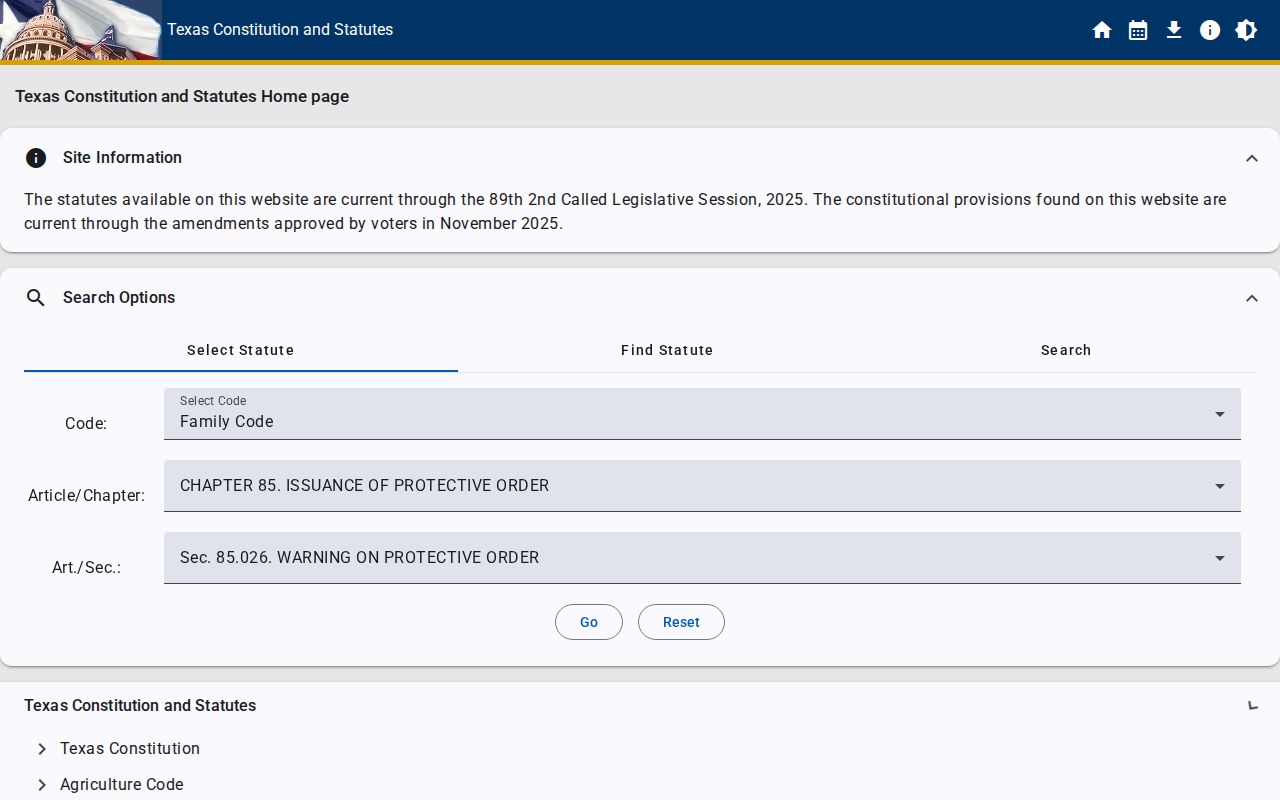
If access is denied, ask the clerk for the current procedure rather than guessing at what a restricted filing contains. Texas also gives the state authority over electronic filing and database access. The assigned source points to Government Code section 72.038 on that point.
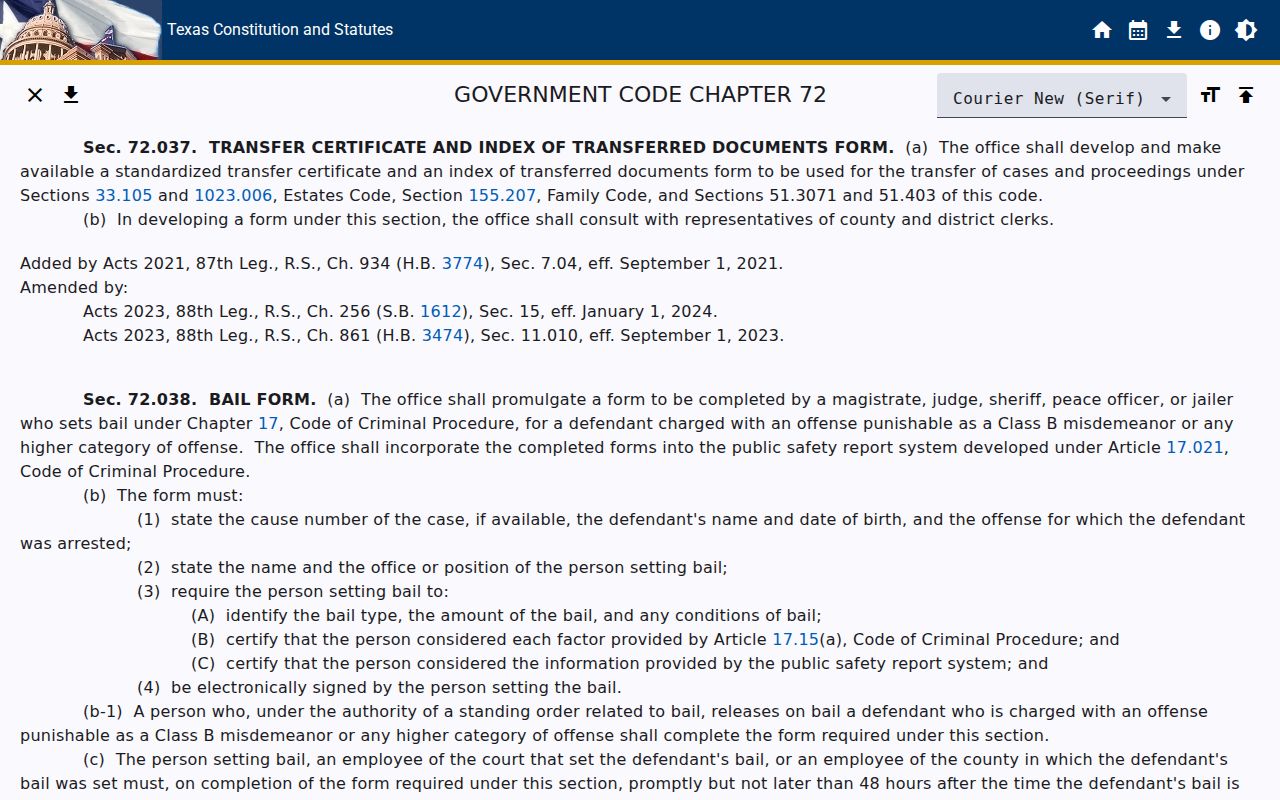
State authority over electronic filing does not open every Fisher County criminal file to the public, and it does not gather all criminal records into one statewide system. For the official file, the local clerk remains the source.